Giachino (00:05.0179 - 00:51.0540)
Welcome to IP Protection Matters. I'm your host, Renee Giachino.
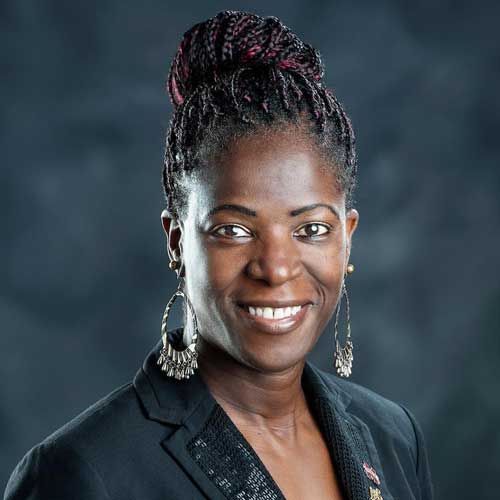
Today, we are joined by Dr. Colleen Scott. Dr. Scott is a Chemist and Associate Professor at Mississippi State University. Dr. Scott has been working in an amazing field discovering a new class of shortwave infrared imaging dyes that have the potential to allow surgeons to visualize tumors with greater depth and clarity in real time. She is a recent recipient of an American Innovator Award that was given to her by the Bayh-Dole Coalition. She joins us today to talk about her research and about the role of intellectual property in academic research. Dr. Scott, welcome to the program. Thank you for joining me.
Scott (00:51.0555 - 00:53.0550)
Thank you for having me.
Giachino (00:53.0570 - 01:38.0000)
So I'd like to start. You have quite an interesting journey that takes you from Jamaica all the way to the United States with some very interesting stops along the way, including something that I think very few people can ever aspire for, or even come close to nearly accomplishing, and that is being an Olympic-caliber athlete. I'm sure a lot of folks who talk to you want to hear about that experience. So if you don't mind, take us back in time and tell us about your track career in the triple and long jump and how that brought you then to Auburn and ultimately into the research domain.
Scott (01:38.0709 - 03:50.0960)
Thanks, Renee. So as a young girl growing up in Jamaica, Jamaica is known for its track athletes. So you grow up always hearing about the athletes who have gone to the Olympics and other international events and have done well. So you aspire to become one of those athletes. As a young child growing up in Jamaica, that was one of my aspirations was to go to the Olympics.
Now as a child, you have no idea of how to do that or if that's even an option for you. However, I love running and doing sports and so I've done all the sports. Then at the end of my high school tenure, my high school coach got me involved in trying the triple jump on a whim - just try it. I did and I did pretty well because it allowed me to get a scholarship to go to Auburn University in Alabama. That's really when I thought, okay, there's a chance of the Olympics maybe.
But most importantly, I stepped on the campus of Auburn University determined to graduate with honors. I wasn't quite sure what I would major in, but I just knew whatever I did, I was going to graduate with honors. So at Auburn University, I continued my track career and of course the 1996 Olympics was just down the road in Atlanta, which is about an hour and a half drive from Auburn. I watched that Olympics in my apartment and dreamt of one day competing in the Olympics. I tried very hard and came very close. Unfortunately, I didn't quite get there. But fast forward to the end of graduate school. So that's how long I've been trying to go to the Olympics.
Scott (03:51.0119 - 06:09.0040)
Towards the end of my graduate school tenure was the 2004 Olympics. I marginally missed making the Olympic team. So after that, I was discouraged as anyone would be. I shouldn't have said discouraged, more disappointed. Then I had my son in 2005, and I figured I would not do this again. However, I still tried again one more time in 2008, and it didn't work out. So after that I decided, oaky, it's time to focus on the science that I've been working on for all those years while I was still training for the Olympics.
So that's how I ended up being introduced to these fluorescent dyes at the time. We weren't doing the shortwave infrared regime yet. We were just doing the visible fluorescent dyes. I got introduced to it. I loved it. I love colors and these were highly colored molecules. They're easy to see.
From there the idea came about how we could potentially tune the dyes so that they would only respond to cancer cells. So that's where the idea started to tune these dyes to respond to cancer cells only. Then from there hopefully we'll be able to detect the margins of tumors because that's a challenge for clinicians at the moment. For surgeons, they don't know where the margins of tumors are. While there's some other sophisticated techniques that are coming on the market as we speak, there's still no conclusive way of doing that. We're hoping that our technology with responding to tumor cells only as well as being able to do that in deep tissue would help the surgeons in figuring out where tumors are and how they can do surgery more accurately.
Giachino (06:09.0190 - 06:23.0220)
It's a fascinating journey that you've had, and in fact, I think incredibly humbling of you to not mention that you missed the 2004 Olympics for the triple jump by a single centimeter.
Scott (06:24.0149 - 06:25.0320)
That is true.
Giachino (06:25.0920 - 08:19.0695)
Quite amazing. Your journey continued into science where you met your mentor, Dr. Daniel Dyer, who introduced you to dye chemistry. And also the role of intellectual property in academic research.
You just mentioned the work that you're doing to help surgeons define these margins, but I think a lot of people don't understand the role of intellectual property in academic research. That it doesn't just happen in a lab and stay necessarily in a lab or that it doesn't just happen in an operating room with a surgeon having an aha moment. There is oftentimes, and we need there to be, the symbiotic relationship between what is happening in academics and what is happening in the clinical field.
I think you can agree, and I certainly believe it is, that we have the Bayh-Dole Act back in 1980 to thank for the ability to have this research be done in an academic setting, to be able to be patented so that we've got the funds available and we can move this research forward, but then to take it out into the clinical field.
Even going back to your PhD in Chemistry from the University of Pittsburgh to your position at Southern Illinois University to now at Mississippi State, doing the work that you are doing in this field, tell us the progression that you believe academic research and the role IP (intellectual property) protection has had.
Scott (08:20.0355 - 11:14.0705)
You're exactly right, Renee. When I was in graduate school, I automatically thought things were the way they were always. I did not know at the time about the Bayh-Dole Act. I knew that research happens in academia and reaches outside academia to industry, but I didn't quite understand the process of how that happened. I just knew it happened.
It wasn't until I started at SIU in Carbondale that I was introduced by Daniel Dyer, as you mentioned, who was previously working on these fluorescent dyes. He was the one that talked to me about intellectual property, protecting work that has potential to reach beyond the lab, beyond the research to the public and be helpful to the public. That's when I started thinking about or learning about the process of how you get from research in the lab to helping the public and, of course, in between that comes the intellectual property that you need to protect the work that you're working on.
However, I did not understand at the time how we got to be able to protect our work through the Bayh-Dole Act. Having been involved now, I learned about the Bayh-Dole Act later on before this award. But learning about the Bayh-Dole Act really shows how much legislation can help the public and that's what legislation should do, right? It should be to help the public, help the citizens.
So since my days at Southern Illinois in Carbondale, I was able to think not just from, okay, we're doing this in the lab, but once we have accomplished it in the lab, how do we translate it outside of the lab. I've been doing that now for several years since I was introduced to the process. And it is a process. It's not necessarily an easy process. You have to be convinced that your work is capable of being translated to the public to commercialization. Also sometimes you have to be very persistent in convincing others that it is worthy of being protected. So I'm fortunate to be at Mississippi State where this is not a hard sell for them.
Scott (11:14.0716 - 13:22.0750)
For our technology department, they are looking for us to think this way. Looking for researchers to think outside of just what we're doing inside the research lab, but how what we're doing can be translated and taken outside to the public in a form of intellectual property, or IP, where you could either license it to a company or you could do your own startup business and develop it further.
Without the Bayh-Dole Act, we wouldn't be able to do that and, of course, without federal funding. It is important to have federal funding to get started because you need to start from somewhere. Fundamental science is extremely important in getting to translational science. You don't get to translational science without fundamental science. You need to understand the fundamental principles that are working to do whatever you're trying to do in order to then determine how you can make it better and applicable outside of the research lab.
So it is important to have fundamental science funded and also important to have the opportunity to translate that science to reach outside of the lab into the general public. I'm sure the public is excited, or I would say I'm happy to have the technologies that we have right now. Who wants to give up their iPhone? Who wants to give up their television as it is now? It doesn't happen without fundamental science back in the 20s and 30s. That's where it all started.
I am very much pro intellectual property, pro Bayh-Dole, and pro let’s get what we are learning in the lab to be applicable outside of the lab. I'm sorry if I was saying it in so many words, but I am very passionate about this topic.
Giachino (13:22.0789 - 15:27.0219)
We need people like you to be passionate about this topic because obviously anyone who follows this issue is well aware of the fact that there are people who are trying to water down the Bayh-Dole Act. They are trying to not allow the intellectual property protection that is needed in order for us to be able to continue to develop the technologies and the medicines that are changing and saving our lives.
In the recent report where you are highlighted - the 2026 Faces of American Innovation - people can read your story. This is at Bayh-DoleCoalition.org. They've written about and I quote that, “prior to the passage of the Bayh-Dole Act, the government claimed ownership of inventions, but they lacked incentives and expertise to license them for commercialization. Roughly 28,000 patents were held by the federal government in the late 1970s and less than 5% of them had been licensed for further development since the passage of the law in December of 1980.” They've quoted that, “the impact of the Bayh-Dole system has been nothing short of extraordinary with $1 trillion.” That’s with a T. “$1 trillion contributed to the US GDP, 6.5 million jobs supported, and more than 19,000 startups launched.”
As you said, [this creates] opportunity for people. Is it fair, Dr. Scott, to look at this as a three-legged stool? That if we pull out one of the legs, whether that's federal funding, the research by academics like you, or the collaboration that exists with the commercialization to get this out to market, that we are not going to have the inventions and the medicines that we have today? In fact, we are going to lose the technology leadership that we have in the world. Is that fair to say?
Scott (15:27.0219 - 18:39.0589)
I agree with that. Yes, that is fair. It's like you mentioned, if it's a three-legged stool, it's three-legged for a reason, right? You could try to convert it to a two-legged stool, but balancing that would be much more difficult than if you had all three legs.
If you think about other developed countries, for example, I know people who are in China right now who are working on similar projects. I have one student currently working on this project. They have 20, so they're going to get to it much faster than us if we don't have the support that we need. They have the support. We have to get the support from the research side, but also to protect the intellectual property.
Business people are in business to make money, right? That's why they do business. However, they're not going to do business with something that they can't make money from. And so while, yes, I agree that the industry should collaborate and also fund some of the research, once you get to a point you have de-risk the area of the research by doing the fundamental science and asking the fundamental questions. Then we do need more industry helping to advance the translation of process, but we do not get to that point without the fundamental research.
As you're saying, it's a three-legged stool. You need fundamental research. You need to be able to protect it for industry to be even interested in it, and once industry is interested in it, then you can get it to the public. So the public benefits from the research that they had invested in through the fundamental science. It benefits everyone in the long run if we work together, but we can't be divided. If we're divided, then we leave ourselves open to not being at the forefront of technology, which of course America doesn't want to be. We want to be at the forefront of technology. We want to be the leader. To be the leaders we need to work together.
I'm hoping that whatever legislation is being thought of or put together that would take the rights away from those who develop the intellectual property [that they will] reconsider that, because once again, like you said, it will just sit on a shelf doing nothing. Who's best to develop the technology, but the person who invented it, the person who knows the most about it, right? I am an advocate for the Bayh-Dole Act and to allow researchers to push forward the technology and collaborate with industry to get it to the public.

Giachino (18:39.0939 - 19:42.0520)
I think it's important that studies and reports like this - The Faces of American Innovation report - that they come out, because I do think that we need to continue to get out to the public as well as get up onto Capitol Hill about the importance of IP protection, why IP protection matters in the continued technological developments that we have, and why it’s sacrosanct. Why the Bayh-Dole Act needs to continue to be in place and to not allow any further legislation to dilute it in any way.
You were awarded the American Innovator Award at a recent ceremony in Washington DC. Share with us what happened at that event and why, again, it's important in your mind that we continue to make sure that the general public and folks on Capitol Hill are aware of the importance of the Bayh-Dole Act?
Scott (19:42.0520 - 23:52.0959)
The ceremony was exciting. It was supported by some senators who are supporters of the Bayh-Dole Act. So that was exciting to see and encouraging to see. Also I think that forums like yours and others who are advocates for the Bayh-Dole Act, that we should have more [of them]. This should be put more into the mainstream on social media, like you have this podcast and others so that the general public will know about it because if the public doesn't know what's going on, they don't know how to vote. I think just letting the public be aware of what the Bayh-Dole Act stands for, to advocate for it, to talk to their senators and their representatives in office, then I think that would dramatically enhance more support for it.
Also in talking to different government administrators, leaders, and representatives about the Bayh-Dole Act, we talked to some who were aware of what's going on and some were not quite aware of what's going on. That was my first time ever on Capitol Hill. I don't know all the different things that they have to deal with, but I'm sure it's a lot. If we don't continually put this before them, it's easy for them to dismiss it because it's not at the forefront of things that they're dealing with.
But if we don't make this an essential aspect of the U.S. [GDP], I'm drawing blank for words because this is not typically things I talk about, but how we see science and technology investment made back into the country. I'm sorry, I'm losing my thoughts on how you look at the amount of money that comes in the country and how the country runs. This is a big part of it.
You have industries that are taking drugs developed from the laboratory to then put in people's bodies and saving lives. So I think that the public needs to be aware. So more public forums like yours and others should be talking about these things so that our public is aware of what's going on in our government and so that they can put pressure on their legislators to support what's going to in the end benefit them as citizens of the United States.
It is extremely important and I would do it over again. I would talk to whoever I need to talk to. I continually now talk to others around me about the issue and introduce them to the Bayh-Dole Act, which a lot of people didn't know about. Like I said, I knew that you can take research into industry and understand the process. A lot of people don't understand how they have the medicine that they're taking and how they get the technology that they're using in their home and in the classrooms and many other places in their businesses. Businesses prosper from the technology that's being developed through having the Bayh-Dole Act in place, but they don't know that. If they don't know the process, then it's easy for them to ignore the problem.
Giachino (23:53.0229 - 25:39.0449)
What you're saying clearly and what we're seeing is a strong need for education on these ideas and for people to understand that some of these proposals where they talk about expanding the government's march-in rights, the ability of the government to march-in, and to limit the commercialization of some of the work that you are doing and your fellow academicians are doing to limit those, it is probably going to be one of the biggest threats to IP protection and, in fact, going to have a significant chilling effect on innovation.
As you talked about, there needs to be incentive for people in academia to develop these, but then there needs to be incentive down the road as well, that third leg of the stool, so to speak, for someone to want to commercialize what is being done. And if there's the threat of the government coming in, marching in is the terminology that's used, to limit that or to have price controls, for example, I think we are going to see a significant decrease in innovation in America.
As you said, the Bayh-Dole Act, that piece of legislation is probably the most inspired piece of legislation enacted in America over the last half century. It has allowed us to develop as a country, to develop jobs, to develop the medicines, the pharmaceuticals, the technology that we have today. There have been apparently more than 200 drugs approved by the U.S. Food and Drug Administration [as a result of the Bayh-Dole Act]. Pharmaceuticals that all started in university labs. That's amazing.
Scott (25:39.0829 - 27:47.0530)
Exactly. The term I was thinking of was the GDP. If we think about what it was before the Bayh-Dole Act, before all of these technologies were not able to be commercialized in the United States, if you look at it from that perspective, you would not hesitate to support this.
You will see that you don't want to go back to where you don't have jobs because you're going to lose jobs. That's the first thing you're going to lose is jobs. You're going to have people not able to work and then you're going to lose knowledge. You're going to lose knowledge because if you don't continue to develop that technology sitting on a shelf, that's losing knowledge. There's a lot to be lost and I don't see anything to be gained. I don't understand the argument.
What is it that will be gained by watering down the Bayh-Dole Act? By limiting it? It may look like, okay, if we say hey, you spend $50 billion developing this drug, but then you have to give it to the public for nothing or a little bit. Who's going to want to develop a drug that they can't make a profit from? And when they make a profit, it goes back to developing other drugs and developing other technology.
But if I have to develop something that then I have to put all this money into developing and I'm not going to even make that money back, then as you said, there will be no interest, right? And so it's not just from the industry side of it, [it is] the academic side of it. If I can develop something that can benefit the public, but I know I can't do anything with it besides publishing it, I'm just going to publish it. Then guess what? Other countries can read that publication and they can go and develop the technology. So it doesn't really serve us well to not protect the research that is being developed in our laboratories.
Giachino (27:47.0530 - 28:22.0750)
It is protecting the system. You're right. It's essential to ensuring the next generation of breakthrough that it reaches the people who need it the most. We already know that our technology and research is being stolen.
If we don't continue to protect the Bayh-Dole Act and what it stands for to transform federally funded research into innovation, we're going to again just cede that to other countries that are going to take it and steal our work and there's not going to be that incentive.
Scott (28:22.0750 - 28:29.0380)
We would have to pay them for the drugs. We would have to pay them for the technology.
Giachino (28:29.0959 - 29:51.0599)
Dr. Scott, we thank you so much for all the work that you are doing. In this article that has been published that highlights you as one of the recipients of the American Innovator Award, it says you describe yourself as someone who has a hard time quitting anything you believe in. A mindset that was shaped on the track and carried into the lab where failure is often a prerequisite to discovery.
I love that message for anybody who is thinking about watering down or doing anything that is going to take away from the hard work that was done, the bipartisan effort back in the 1980s to pass the Bayh-Dole Act. That now allows innovation to happen and for every piece of it to remain a very important part of American technology and innovation and what is happening in our lives on a very, very basic and daily level. From the medicines we take to the food that we eat to the TV we watch and the phones that we use to talk to one another.
I thank you for the work that you are doing, the cutting edge of molecular imaging. No doubt, it is something in our lifetime that I hope will again continue to save lives of cancer patients and others. Any parting thoughts for us, Dr. Scott?
Scott (29:52.0040 - 30:19.0905)
I just want to thank you for allowing me to be on your podcast to talk about something that I am passionate about. Of course, I'm passionate about the research that I do and just want you to continue to bring more education about this issue to the public. I will continue on my end as well. Thank you so much, Renee, for having me.
Giachino (30:20.0385 - 31:16.0900)
We'll continue to follow you and to watch the incredible work that you are doing. I think it's wonderful that your technology transfer office is so supportive in helping to file those patent applications and seek those licensing partners with those medical companies for you.
Year after year you could probably earn the American Innovator Award and again we congratulate you as being one of the recipients this year from the Bayh-Dole Coalition. Have a wonderful afternoon and thank you so much for all your time today.
If you'd like to listen to this version of IP Protection Matters, check us out at IPprotectionMatters.org where you can also listen to many of the other podcasts that have been posted there with other wonderful guests. Thank you again to our guest today, Dr. Colleen Scott, a Chemist and Associate Professor at Mississippi State University.